Who this is for, in one line
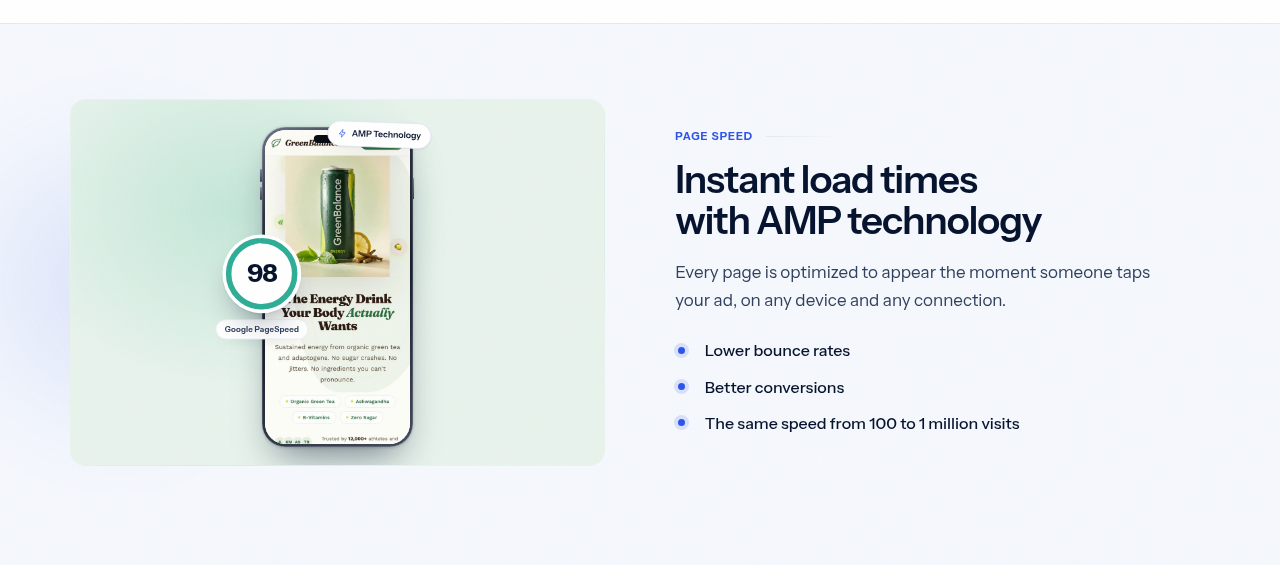
You have seen Swipe Pages in a Facebook group or an affiliate forum, usually attached to a screenshot of a 98 PageSpeed score, and the pitch is always the same: the fastest landing pages you can build without a developer. The question under "should I buy it" is really two. Is it a real, safe product? And will I regret the money once the trial ends? This review answers both for someone buying paid traffic, because that is who reads this site.
The short version: it is real, and for a paid-traffic marketer it is one of the better-fitting tools on this list. It sits at number seven in our ranking, above Leadpages, because it does the two things a cold click needs (load fast and test safely) at a low price, and below Instapage and Landingi only because those are older tools with larger template and integration libraries.
Is it real?
Yes. Swipe Pages has been shipping for several years, reports more than 7,000 paying customers, and carries steady public ratings: 4.8 on G2 across 174 reviews, 4.9 on Capterra, 4.7 on Trustpilot at the time we checked. AMP is not a marketing word it invented either. It is a page framework Google built for instant mobile loads, and Swipe Pages builds on it, then serves pages from a global CDN. Payments run through Stripe and Chargebee, pages get free SSL, and there is a published overage rate rather than a vague "contact us". None of that is the profile of a product that disappears next quarter.
What it does well for paid traffic
The speed is genuine, and it is the reason people pick it. On G2 a reviewer describes lightning-fast loading times, and that is the whole point: a page that paints the instant someone taps your ad keeps the click you paid for. Swipe Pages runs its optimization tasks every time you publish and serves from a CDN, so the page stays fast whether you send it 100 visitors or a million.
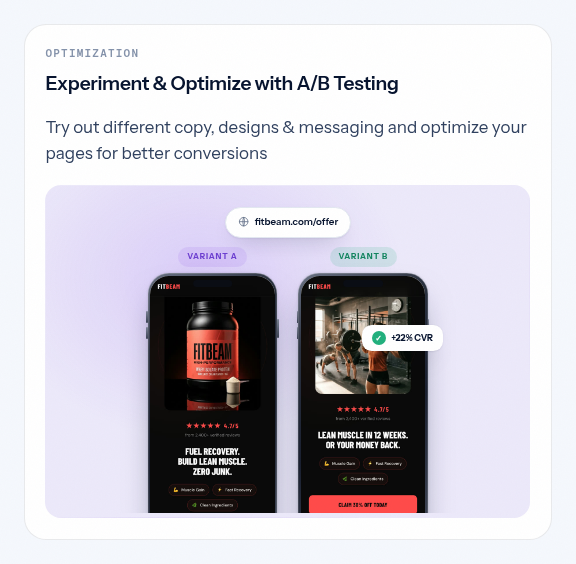
The testing is the ad-safe kind. From the Marketer plan, Swipe Pages splits traffic between page variants server-side under one URL. That matters more than it sounds: when a test changes the destination link, Meta and Google can treat it as a new ad and reset the learning phase, which spikes your cost per result for days. Testing under a single URL avoids that reset. Dynamic text replacement lets one page swap its headline to match the ad keyword, so you run fewer pages and keep the data in one place.
It also does not punish a winning campaign. Landing pages and conversions are unlimited on every plan; only monthly visitors are capped, and above the cap you pay a published $5 per extra 5,000 visits rather than getting bumped to a sales call. And unlike Unbounce or Instapage, it has a built-in checkout with Stripe, PayPal and Razorpay, order bumps and upsells on every tier, so a simple own-offer sale does not need a second tool. The 14-day trial is full-featured and takes no credit card, which makes it cheap to find out if the builder suits you.
Where you would regret it
The speed is bought with AMP's constraints, and that is the honest catch. AMP limits custom JavaScript, heavy animations and some third-party scripts, so a visually rich or highly interactive page is harder to build here than in a general builder. A Capterra reviewer puts it plainly: there are some restrictions on what can be done with the page layout and build, while adding that it is still adaptable enough for most work. For a standard direct-response lander that trade is usually worth it; for a heavily animated microsite it is not.
Measurement is the weaker spot. There are no native heatmaps, and one G2 reviewer warns that they don't allow you to track phone numbers in any way so your true analytics are always screwed up. In practice you connect your ad pixel, push leads out through Zapier, and use an outside analytics or session-recording tool for the detail Swipe Pages does not show. It is also a page builder, not an affiliate tracker: there are no server-to-server postbacks to a network like ClickBank or Digistore24, so if you buy network offers you keep running a dedicated tracker alongside it.
Two smaller notes. Server-side A/B testing waits for the $69 Marketer plan, so the $29 Startup tier is really for building and publishing, not testing. And support runs 12 hours a day, five days a week rather than round the clock. Most reviewers find it quick when it is open. On Trustpilot one writes that the few times I have asked they have responded quickly, though a minority report slower waits, so weekend emergencies can sit until Monday.
What the plans cost, tier by tier
Three plans, billed monthly or annually, with annual saving up to 25%. The annual per-month rates:
| Plan | Annual /mo | Visitors /mo | A/B testing |
|---|
| Startup | $29 | 20,000 | No |
| Marketer | $69 | 50,000 | Server-side |
| Agency | $149 | 500,000 | Server-side |
Paid month to month the same plans cost more. Conversions, landing pages and funnels are unlimited on every tier, checkout is on every tier, and above the visitor cap the rate is $5 per extra 5,000 visits. The realistic entry point for anyone who wants to test is Marketer at $69, because A/B testing and dynamic text replacement start there. Prices checked on the vendor's pricing page on 28 September 2026; confirm the current numbers before you buy.
Changelog
- 28 September 2026: first published. Plans, features and the trial verified on the vendor's own pages; user sentiment drawn from G2, Capterra and Trustpilot.