ElasticFunnels
- Trial
- 14-day, no card
- Split testing
- Same-URL, all plans
You buy clicks into a funnel and need pages, a checkout, tests and follow-up that hold up as spend climbs, without a visitor cap eating the margin or a new ad URL every time you test a headline. Start with ElasticFunnels or Swipe Pages Marketer if a test must keep the ad link unchanged, ClickFunnels for uncapped visitors on one bill, Systeme.io when the budget is zero, GoHighLevel when every lead gets a phone call, and Checkout Champ once order volume is high and checkout tests are the lever.
See the full landing page builder roundup
A software sales funnel is the path a buyer walks: a landing page, an order form, an upsell or two, then the emails or texts that follow. A landing page builder handles the first step. Sales funnel software handles all of them, so the click, the order and the follow-up sit in one account.
Paid traffic adds a constraint most roundups skip, which is the ad link. Media buyers in an r/PPC thread on testing landing pages put a server-side split first, because it keeps the campaign's delivery algorithm out of the test. Launching a second ad that differs only by its URL, the same thread says, gives you data you cannot trust, since the platform decides which ad gets shown.
So three questions sort the field before features do:
Size the test before you size the plan. The split-test sample size calculator gives the visitors each variant needs, and on a capped plan those visitors count against the cap.
Two tools here rotate variants on the server under one URL. Each visitor sees one version, the ad keeps its link, and the campaign carries on learning. Builders that are pages first, including the ones that cap traffic, are sorted in landing page split testing.
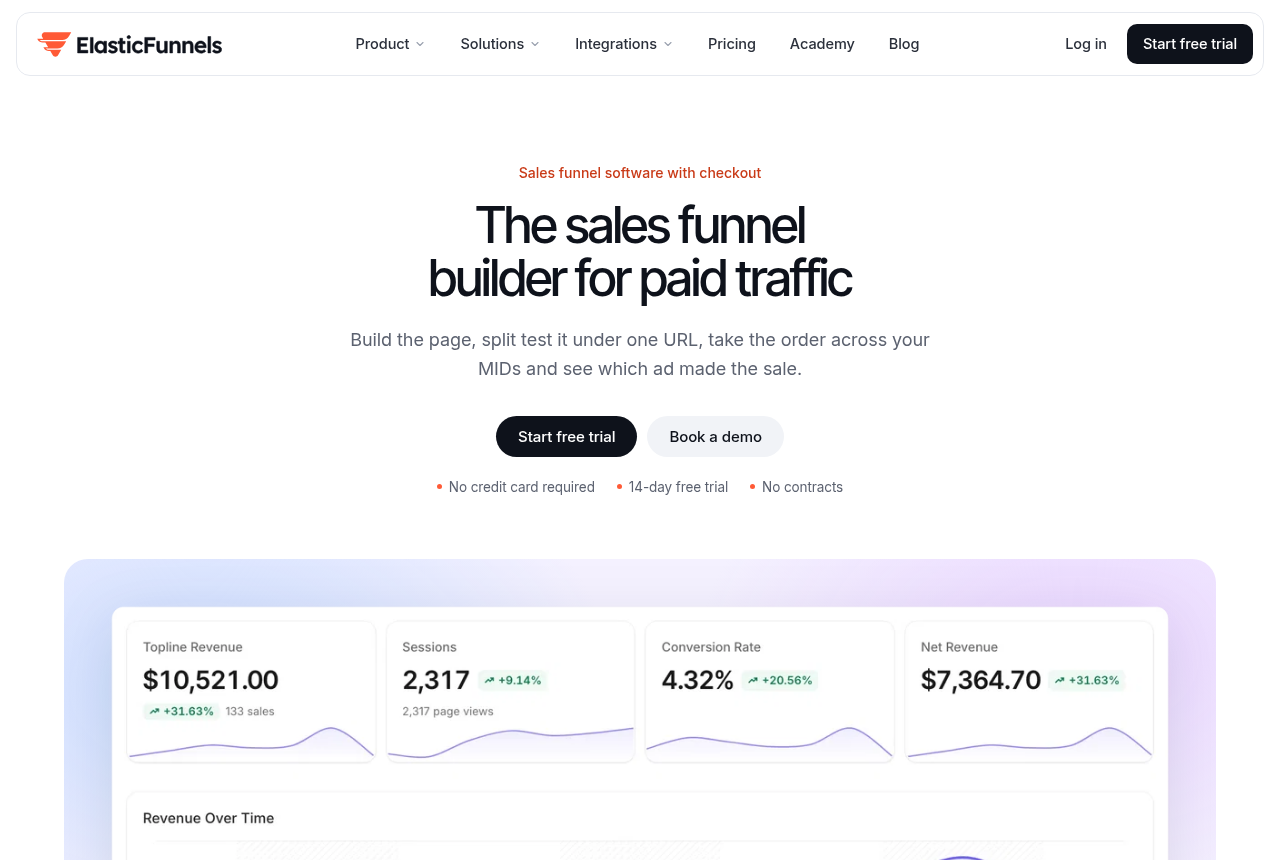
ElasticFunnels is a funnel platform for teams running paid traffic. Its features page says variants rotate server-side so Meta, Google and TikTok never reset campaign learning. Around that test sits the rest of a funnel: an AI page builder that also clones a page from a URL, a hosted checkout with order bumps, one-click upsells and subscriptions, and a CRM, automations and attribution that share one record with each order. Every plan carries every feature. The plans differ by page views, brands, domains, seats and automation runs, and if you go over, you pay for the extra page views by the thousand instead of being forced to upgrade. It also keeps 0.5% of revenue that runs through its own gateways.
Its weak point is age and outside proof. ElasticFunnels has been in development since 2023, which makes it newer than ClickFunnels or GoHighLevel, and there is very little independent review coverage to check its claims against. That is what you would expect of a platform this young, and the trial asks for no card, so I would run one campaign through it and judge it on cost per sale before depending on it. The ElasticFunnels review covers the checkout and attribution side in more depth.
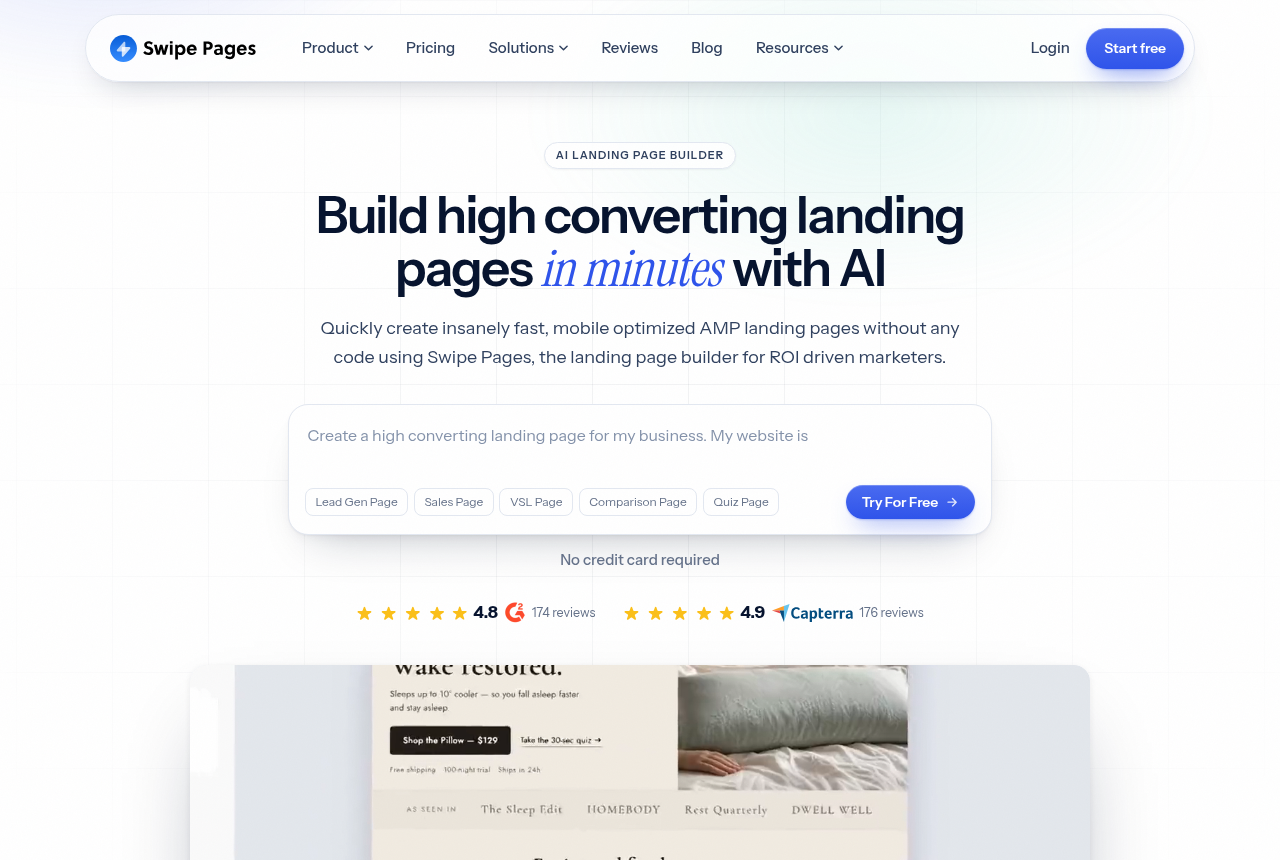
Swipe Pages is a landing page builder made for fast mobile pages. Its pricing page puts server-side A/B testing on the Marketer plan, and the Startup plan below it leaves the test out, so I would skip Startup for paid traffic. Marketer covers 50,000 visitors a month, and every 5,000 past the cap costs $5. Swipe Pages fits a funnel that is mostly one page and a form, with the sale handled somewhere else. More in the Swipe Pages review, or set the two side by side in ElasticFunnels vs Swipe Pages.
ClickFunnels lists unlimited visitors on every paid plan and, in its pricing FAQ, says it takes no percentage of your sales. When spend doubles in a good month, the bill stays where it was.
Its A/B testing compares two variations of a funnel step, such as a headline, a button or an offer. That covers most page tests. The vendor describes it as a step test and does not say the ad's URL stays fixed while it runs, so a buyer whose campaigns are sensitive to link changes should treat it as a different mechanism from the server rotation above.
The entry plan is thinner than its price suggests: Launch shows no automations or advanced workflows, so email follow-up means the next tier or a separate tool. That second tool is the bill people leave over. A solo founder in r/clickfunnels called dropping ClickFunnels, Mailchimp, an old CRM and Zapier one of their best decisions. If you want uncapped traffic and no cut of sales, and you will move above Launch once automations matter, it holds up. See the ClickFunnels review and ClickFunnels vs Systeme.io.
Checkout Champ is built for sellers who already move real order volume. According to its pricing page, the funnel builder runs A/B/C/D splits on a chosen page with traffic shares you set, so four versions of an order form or an upsell can run at once.
Cost is the objection. Growth charges a monthly fee plus a share of gross sales, so the bill climbs with revenue, and you get access through a sales demo since there is no self-serve trial. For a lead magnet and a few emails it is far more than you need, and I would not book the demo until the checkout is the step you most want to improve. When the next point of margin sits in the checkout and the upsell path, this is the tool built for that job. The Checkout Champ review goes through the plans.
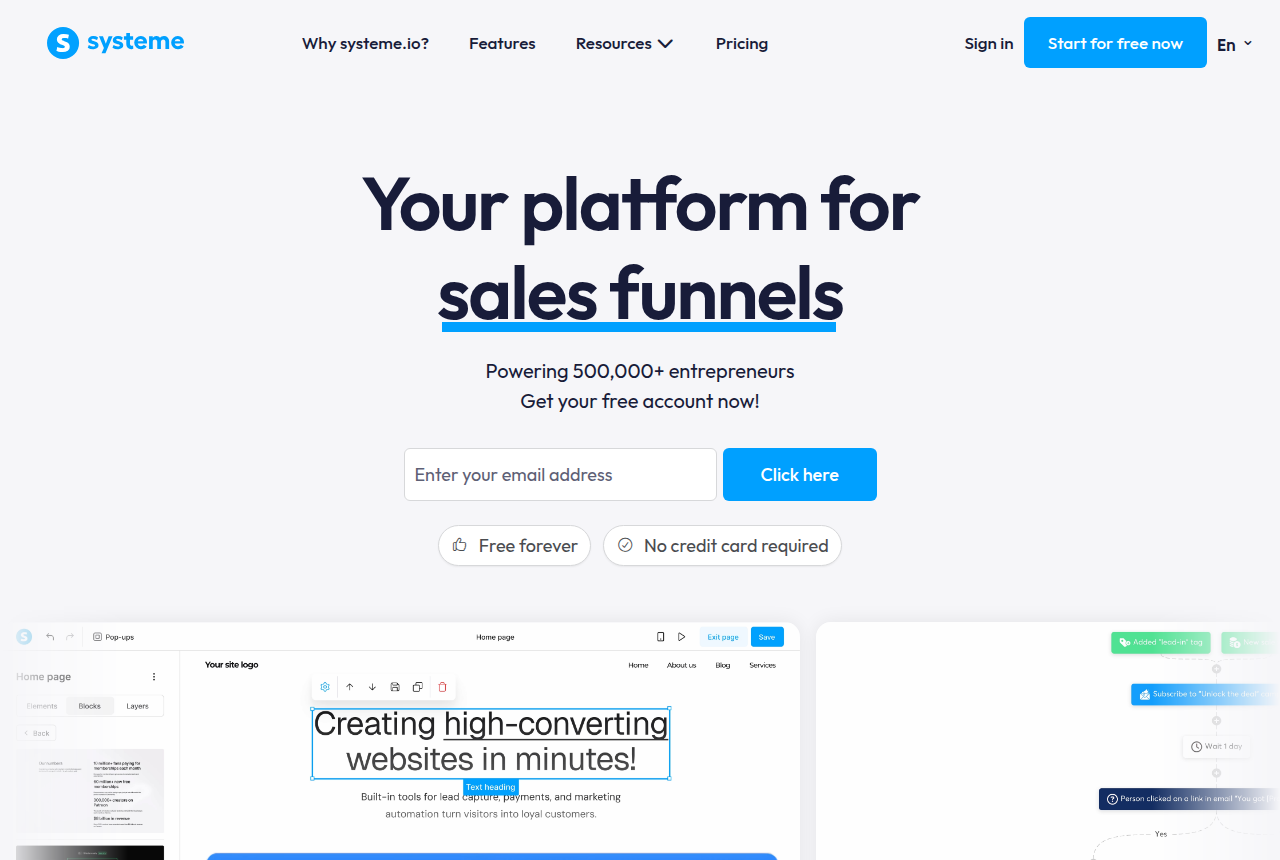
Systeme.io is sales funnel builder software in the plain sense: drag-and-drop pages, payments, email and courses in one dashboard. Its sales funnels page offers the funnel builder on every plan, the free one included, with up to three funnels and 2,000 contacts. It also splits traffic between two page variations inside a funnel, enough for a headline or offer test on a small budget.
The free plan allows a single automation rule, so a second trigger means a paid plan. Those plans cost a fraction of the funnel suites above, and I would start any unproven offer here before paying for a bigger suite. Read the Systeme.io review for the plan limits.
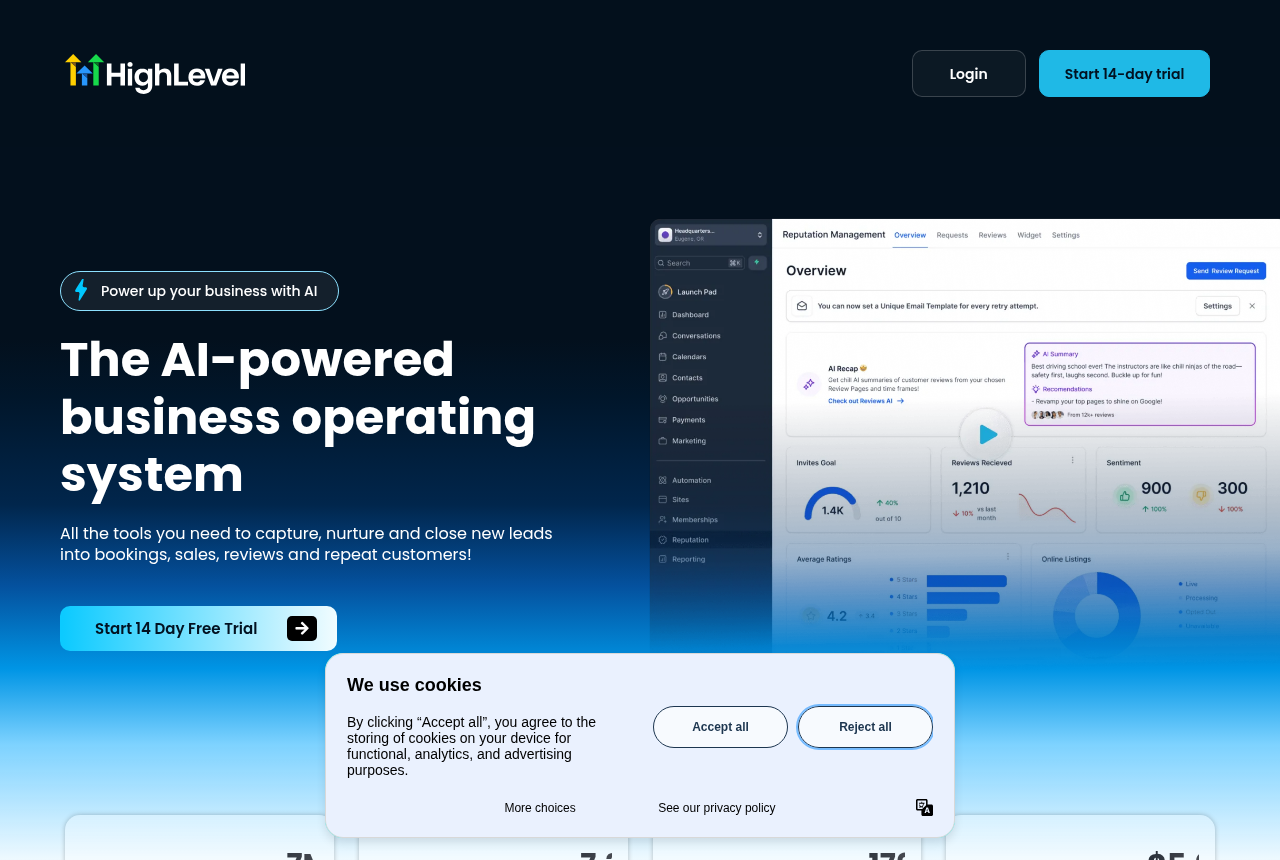
GoHighLevel starts from the contact record. Its pricing page says most users replace their CRM, funnel builder, email software, scheduler, SMS tools and review software with it. For a business where a lead turns into a call or a booking, that order of priorities makes sense.
Watch the usage line before you scale ads into it. Texts, calls and premium AI are billed by use on top of the subscription, so a funnel that texts every new lead costs more as spend rises. I would price a month of texts at your current lead volume before moving ad spend onto it. Agencies running funnels for several clients get the most from it. Compare it in ClickFunnels vs GoHighLevel or read the GoHighLevel review.
I would choose by whichever constraint bites first. If you buy traffic to your own offer, the ad link is that constraint, and I would put one live campaign through the ElasticFunnels trial and judge it on cost per sale. If spend swings hard from month to month, the uncapped visitors on ClickFunnels count for more.
With no budget yet, stay on the Systeme.io free plan until the offer sells. A phone-led service business belongs on GoHighLevel, and a seller whose checkout is already busy should book the Checkout Champ demo. Whatever you lean towards, put your monthly traffic into the builder cost calculator first, and look at the small-business funnel picks in the roundup if you sell a local service. Promoting a ClickBank offer is a different page: the ad has to open a page you host, and the steps are in the ClickBank landing page guide.
See the full landing page builder roundup
11 discussions and reviews read for this page. Quotes are excerpts; open a link to read the original in context.

Written by
Marcus Reeve
Editor
Marcus leads the rankings at Lander Report. He reads the long threads where media buyers argue about which builder survives a Meta review and which one resets their ad learning, works through the vendors' own docs and pricing pages, and verifies every price before it goes in a table. He writes the roundups and the head-to-heads, and he cares most about one question: does a test cost you your campaign's learning phase?
Last checked 2026-10-13