The lander a solar, Medicare or insurance buyer will pay for
You buy Meta or Google clicks for solar, Medicare or insurance offers, and a generic roundup never mentions the consent line, the qualifying questions or the phone call. Start with Swipe Pages when the buyer pays for a finished form, GoHighLevel when you own the calls and the texts, Leadpages when one URL has to match many ad angles on uncapped traffic, and Systeme.io when the funnel is still a test.

What a pay-per-lead buyer expects from the page
A form submit, a live transfer and a booked appointment pay differently, so the page changes with the payout. On a public solar thread, operators rejected a $5,000 figure for a raw residential lead and put a qualified lead nearer $30 to $80, with an exclusive lead or an appointment nearer $180 to $250. Those figures are one thread's argument, and a Medicare or insurance order can land somewhere else. They still separate a short qualifying form from a page whose job is to start a phone call.
A public affiliate thread names insurance, mortgages and Medicare as the verticals where lead payouts tend to sit. Build the page around what the insertion order pays for, whether that is a form, a call or an appointment.
TrustedForm and Jornaya certificate IDs usually travel in the form post, or in a script the company paying for the lead gives you. They sit beside the builder. None of the four tools below lists either certificate as a product feature, so a roundup that treats them as a checkbox inside the editor is describing a different product.
The CRM, the dialer and the network postback are a wider stack, covered in sales funnel software for paid traffic. The choice here is which builder publishes the lander.
Federal TCPA consent on the form
The FCC's 2023 one-to-one consent rule for lead generators never took effect. The Federal Register notice of 29 August 2025 records that the Eleventh Circuit's mandate of 30 April 2025 vacated, as of that date, the 2023 change to the first full paragraph of 47 CFR 64.1200(f)(9). The notice restores that earlier definition.
Prior express written consent, in that reinstated wording, is an agreement in writing, bearing the signature of the person called, that clearly authorizes the seller to deliver advertisements or telemarketing messages using an automatic telephone dialing system or an artificial or prerecorded voice. The notice restores the definition together with the disclosures that travel with the agreement. The person can complete the purchase without signing the consent, and the checkbox starts empty.
Written consent is still required before autodialed or prerecorded telemarketing goes to that number. The checkbox has to name the seller and the kind of message, because the definition asks for a clear authorization to a specified number. A box that arrives already ticked fails the definition the notice restored.
An insertion order can ask for more than this federal baseline. When the company buying the lead is a third-party marketing organization, ask them for the sharing language they require. Medicare marketing rules can be stricter about who receives the lead than the federal line above, and the buyer's script is the text that goes in the checkbox.
A solar leads landing page that keeps the phone number
Swipe Pages' lead-generation page describes the multi-step pattern in plain terms. Capture the name and phone number on the first step so the lead is locked in. Ask about project scope, budget and timeline on the second step, which is the vendor's own example. A visitor who leaves during those questions still leaves a phone number. The same page shows a quiz-style insurance example, with term life on that second step. Multi-step forms are listed on every plan.
A solar leads landing page uses that order for a different set of questions. The first step collects the phone and the email. The next step asks about the roof, the power bill and the ZIP, which is what a solar buyer uses to tell a qualified lead from a curious click. The person who closes the tab on the roof question has already left a way to reach them.
Cold traffic that has not heard the offer yet often needs a presell before this form. The article, the label and the handoff are in how to build an advertorial landing page. The form comes after that presell, once the reader is ready to leave a phone number.
Unbounce is the runner-up if those pages already live in Unbounce. Multi-step forms start on Build, and classic A/B testing is on Experiment. The Unbounce review is where those plans are spelled out.
A Medicare lead generation landing page
A Medicare lead generation landing page is usually a short quiz. Age comes first, then whether the person has Part A and Part B, then ZIP. Each answer decides whether the next screen is worth showing. The quiz is a form you assemble in the builder. Ask the buyer if their Medicare rules allow that quiz before you turn the ads on.
When the buyer is a third-party marketing organization, the sharing consent can be stricter than the federal TCPA line above. Use the consent line the buyer gives you, and put it on the quiz. A generic insurance consent block is the wrong text once the offer is Medicare.
Call-transfer offers need a click-to-call control, and they often need a tracking number that is separate from the office line. That number usually comes from a pool such as Ringba or Retreaver, or from the buyer who is paying for the transfer. The builder hosts the button, and the pool places the number.
Call tracking for insurance and auto
On an insurance or auto pay-per-call offer, the builder publishes the page and the form. Swapping the number by source, by state or by buyer is the pool's job. Swipe Pages has no native call tracking, which is the limit on a connected call. You still publish the form there, and you place the pool's script or the buyer's number on the page.
GoHighLevel's pricing page lists forms, surveys and quizzes together with inbound and outbound calling, two-way SMS and email, and CRM pipelines. The form submit and the call can live in one login, which is the point of picking it when you dial the lead yourself. The page builder is the weaker part of that product. You are paying for the dialer and the texts, and the lander only has to capture a name and a phone number.
Insurance and auto ads often change the state or the offer while the campaign URL stays put. Leadpages includes dynamic text replacement on Grow, so the headline can take the state or the offer from the ad's URL parameters. Manual A/B testing and lead enrichment start on that same plan. Before a live test depends on one public address, read how to split-test a lander without resetting ad learning.
Four builders, and the plan that matches the payout

Swipe Pages
- Price (22 Nov 2026)
- Startup $29 a month billed annually, 14-day trial, no card. Marketer $69 a month billed annually, with server-side A/B testing and dynamic text replacement.
- Allowance
- Startup, 20,000 monthly visitors. Marketer, 50,000 monthly visitors. Multi-step forms on every plan.
Form fills you post to a buyer, when step one keeps the phone number and Marketer sends the lead event back to the ad account.
Swipe Pages is the builder for a form you hand off. Its lead-generation page says those lead events go back to Google Ads, Meta and TikTok through conversion APIs, so the ad account can learn from the qualified submit. Server-side testing and dynamic text replacement start on Marketer. Startup is how the first pages go live. The call-tracking limit above is why a pure pay-per-call offer belongs with GoHighLevel. Plan limits past this card are in the Swipe Pages review.
Leadpages
- Price (22 Nov 2026)
- Grow $67 a month billed annually, with manual A/B testing, dynamic text replacement and lead enrichment. The trial asks for a card.
- Allowance
- Traffic is unlimited on every plan, with no overage.
One URL under heavy traffic, when the headline has to swap the state or the offer from the ad.
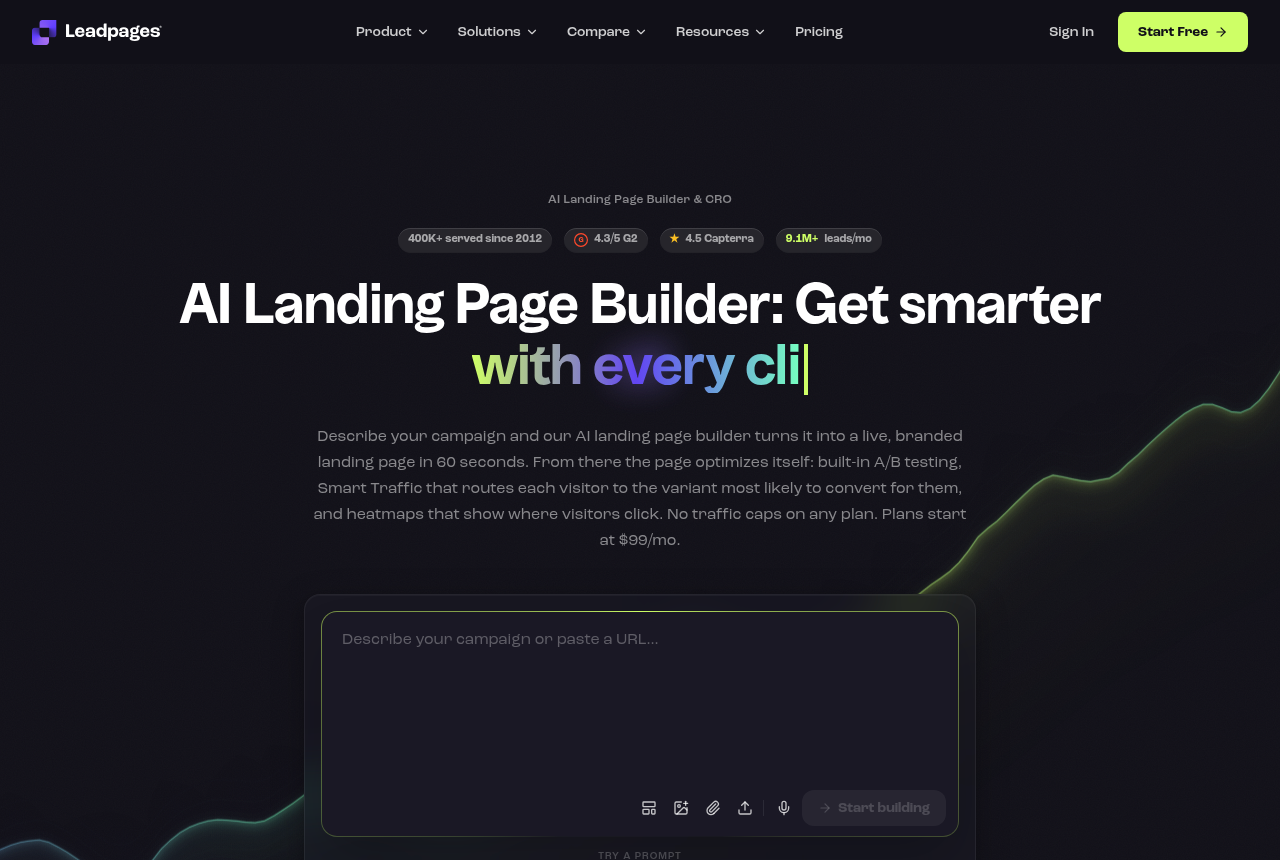
Leadpages is the login when the clicks will not fit a visitor allowance and each ad needs its own headline on the same URL. Grow is the plan that turns headline replacement on. A lower plan publishes the page and leaves that headline static. The Leadpages review is the longer account of the plans above Grow.
GoHighLevel
- Price (22 Nov 2026)
- Starter $97 a month, or $970 a year, with a 14-day trial.
- Allowance
- Forms, surveys and quizzes, CRM pipelines, inbound and outbound calling, two-way SMS and email.
You own the follow-up. The same login that takes the form can place the call and send the text.
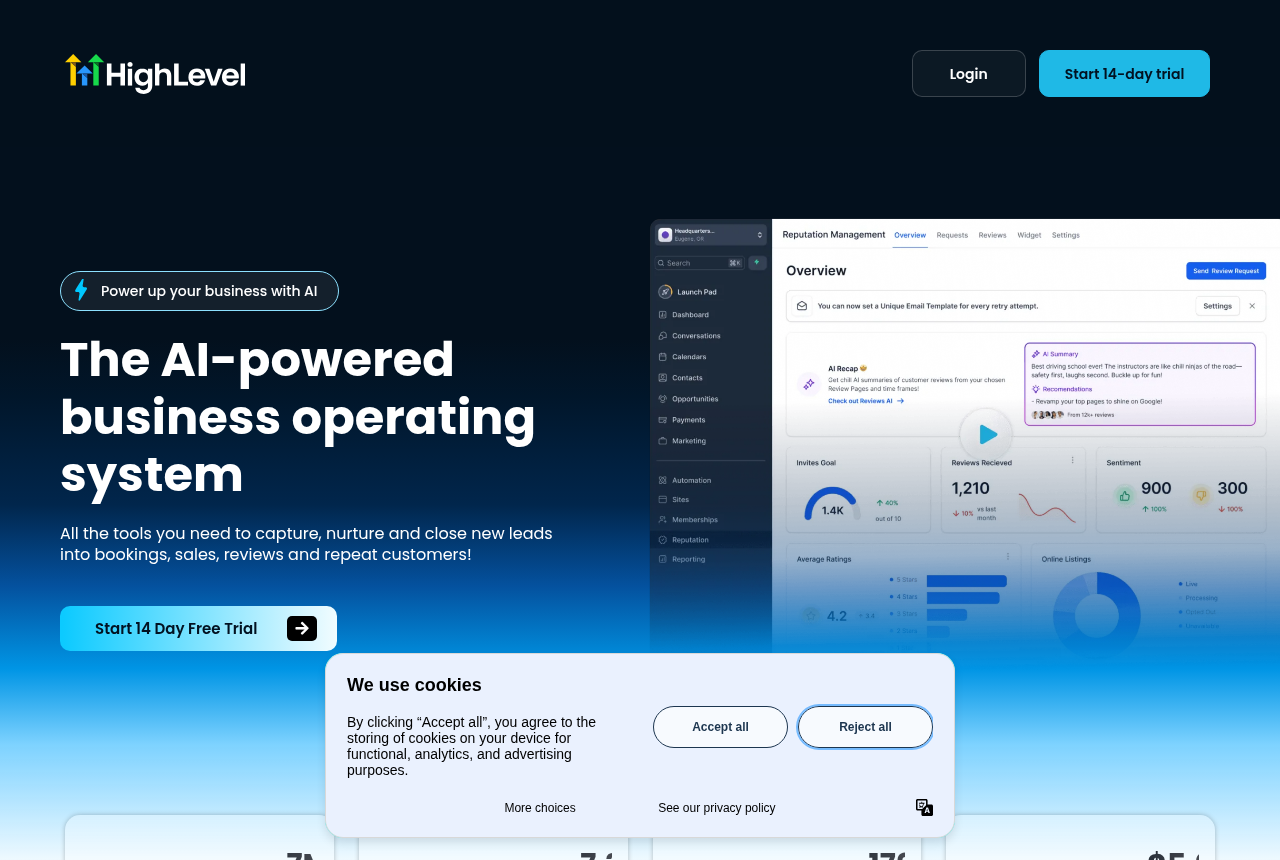
GoHighLevel fits an agency that dials and texts from the same login that stored the form. Inbound and outbound calling sit on the pricing page beside the forms. The lander is the supporting piece. A layout that has to load fast on a phone, inside an ad app, belongs on the AMP builder above. The GoHighLevel review spells out the pipeline and the phone features.
Systeme.io
- Price (22 Nov 2026)
- Free, no card. Startup $17 a month.
- Allowance
- Free: 2,000 contacts, 3 sales funnels, 1 custom domain, unlimited email. Startup: 5,000 contacts and 10 funnels.
A first quiz or funnel on your own domain, before a software bill.
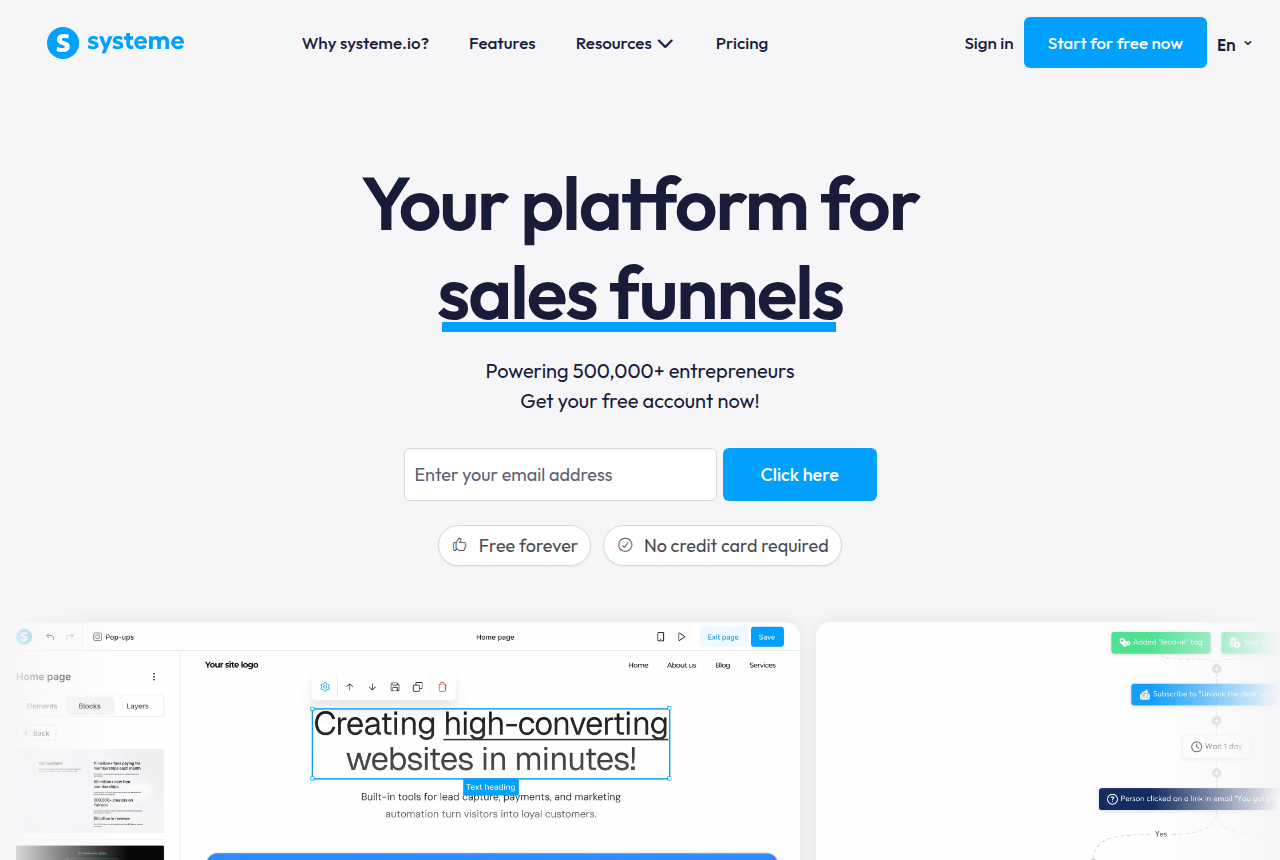
Systeme.io publishes the quiz on your domain on the free plan. Move to Startup once that plan's contact limit or funnel limit is too small. The editor is plainer than a product built around lead quizzes, and a long Medicare quiz shows that gap. Builders that stay on a small monthly bill are lined up in cheap landing page builders under $50 a month. The Systeme.io review covers testing once you leave the free plan.
Pick by the payout
The best landing page tools for affiliates running solar, insurance, and Medicare offers are the four above. The payout decides which one you open.
I'd start with Swipe Pages when the buyer pays for a finished form. I'd skip it for a call you place yourself, and use GoHighLevel for that.
On a form payout, put the buyer's scripts on the Swipe Pages lander. The conversion APIs in the Swipe Pages section are how that submit gets back to the ad account.
GoHighLevel includes the form, the calls and the texts in the same subscription. The page's job is the name and the phone number.
Heavy traffic on one URL, with a fresh headline per ad, points to Leadpages on Grow. Settle whether every variant keeps one public address in the split-test guide before a live campaign depends on it.
Publish the quiz on the free Systeme.io account first. Move to another builder once a buyer will take the lead.
The wider lead-gen ranking, for a handoff and for working the lead yourself, is in the best landing page builders guide. A native campaign that needs an advertorial before any of these forms is a different page, covered in landing pages for native ads.
Prices and product facts here come from each vendor's pricing page and from the Federal Register notice linked below. Reading those pages, and what long-term users report in public, is how Lander Report evaluates a builder. The methodology page spells out that method.
Open the Swipe Pages review
Open the Swipe Pages review if you hand the form to a buyer. If you place the calls yourself, stay with the GoHighLevel section above.
Sources

Written by
Marcus Reeve
Editor
Marcus leads the rankings at Lander Report. He reads the long threads where media buyers argue about which builder survives a Meta review and which one resets ad learning, works through the vendors' own docs and pricing pages, and verifies every price before it goes into a table. He writes the roundups and the head-to-heads, and he cares most about one question: does a test cost you your campaign's learning phase?
Last checked 2026-11-23
Comments
No comments yet. Questions and your own experience are welcome.
Thank you. Your comment will appear once it has been reviewed.