Compare
Leadpages vs Kartra
Quick answer
Leadpages is our top pick for most people. Pick Leadpages if you run paid traffic or capture leads and want server-side A/B testing with no visitor cap from the $99 Grow plan; pick Kartra if you sell and deliver your own offer and want pages, email, checkout, courses and an affiliate program on one login. Leadpages tests variants without resetting your ad learning; Kartra's split testing is page-level and can.
- Leadpages. Best for Uncapped traffic with server-side testing. From $67/mo.
- Kartra. Best for Selling your own offer with email built in. From $52/mo.
Side by side
| Tool | Split testing | Checkout | Free trial | From |
|---|---|---|---|---|
| 1. Leadpages | Server-side, from Grow | Basic | 7-day, card | $67/mo |
| 2. Kartra | Page-level, not same-URL | Yes | 14-day, card | $52/mo |
Where each one wins
Leadpages
What works
- Server-side A/B testing, where variants are assigned before the page renders so there is no flicker, is included from the $99 Grow plan, and no plan caps your traffic.
- AI generates page variants to test, and dynamic text replacement matches the headline to the ad keyword.
What to watch
- Heatmaps and Smart Traffic routing only start on the $199 Optimize plan, and the 7-day trial needs a card up front.
- The lineup splits across HTML Pub publishing tiers and Leadpages CRO tiers, which reads as confusing, and its ecommerce is basic, so selling your own offer means bolting on a checkout.
Kartra
What works
- It really is one system, and reviewers say the consolidation is the point. Pages, email and SMS, native checkouts, courses, memberships, a helpdesk and your own affiliate program run under one login, and users describe cancelling separate CRM, email and cart subscriptions after moving in.
- From the Starter plan up it takes no cut of your sales (0% transaction fees) and includes unlimited pages, products and courses plus webinars. For a creator selling their own offer, that is a lot of platform for $99/mo on the annual plan.
- It is established and low-risk to trust. Kartra has run since 2018, reports more than 60,000 customers, and is a known quantity rather than a product that might disappear next year.
What to watch
- It is built to sell your own courses and coaching, not to run cold paid traffic. There is no same-URL, server-side split testing, so a page test can reset the ad learning Meta and Google rely on, and there are no affiliate-network postbacks for buying traffic.
- Support is the most repeated complaint. Reviewers report multi-day waits and generic 'clear your cache' replies, and even satisfied users call the team slow to respond.
- The $52/mo annual Essentials tier is thin and takes a 5% cut of sales for 5 pages and 1 product. Starter costs $99/mo annually, removes that fee and raises the limits. New users also find the editor dated and slow to learn.
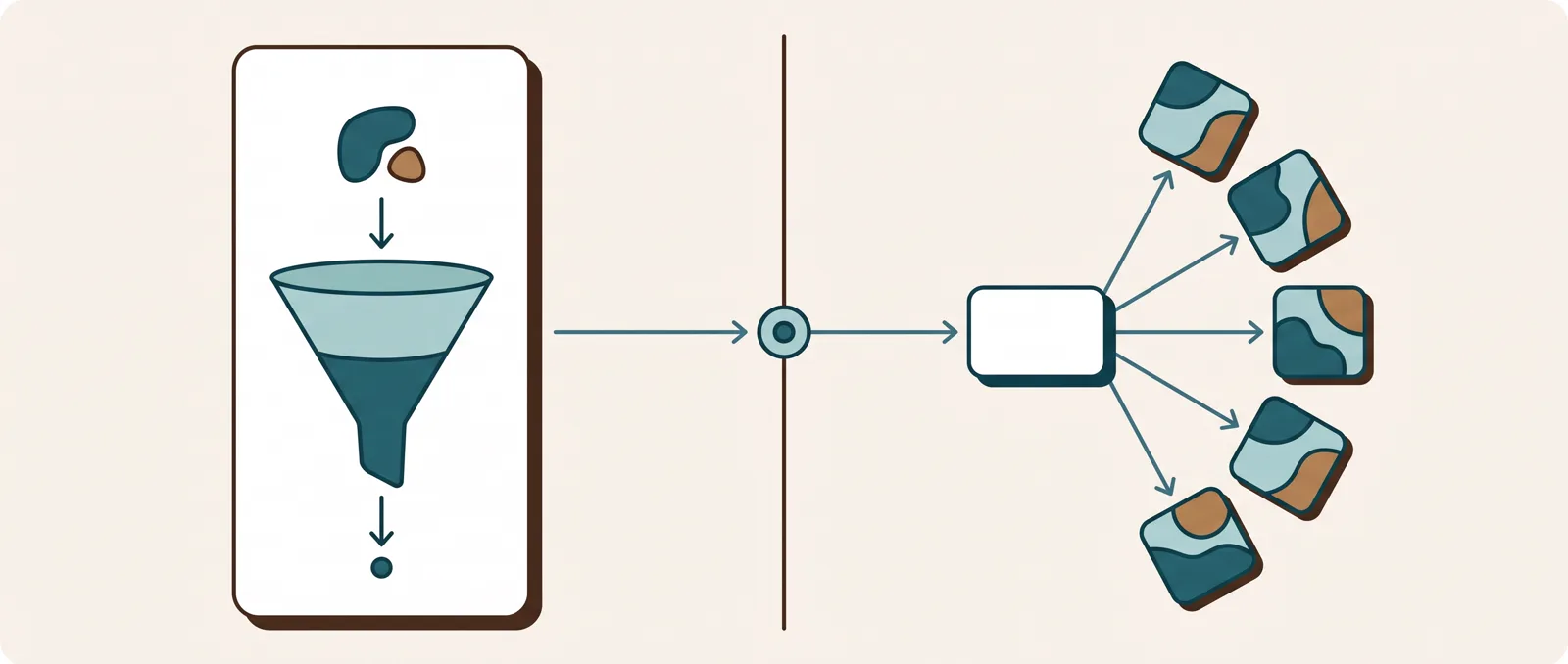
Both of these show up on the same shortlist because both build landing pages, and there the resemblance ends. Leadpages is a landing page and lead-capture builder. It makes pages fast, tests them without flicker, and hands the lead off to your email tool or CRM. Kartra is a creator platform. The page is one room in a house that also holds email, a native checkout, courses, memberships, a helpdesk and an affiliate program. So the real question is not which one builds a better page. It is whether the page is the whole job, or the front door to a business you also run inside the same login.
Pricing compared: same headline, different job
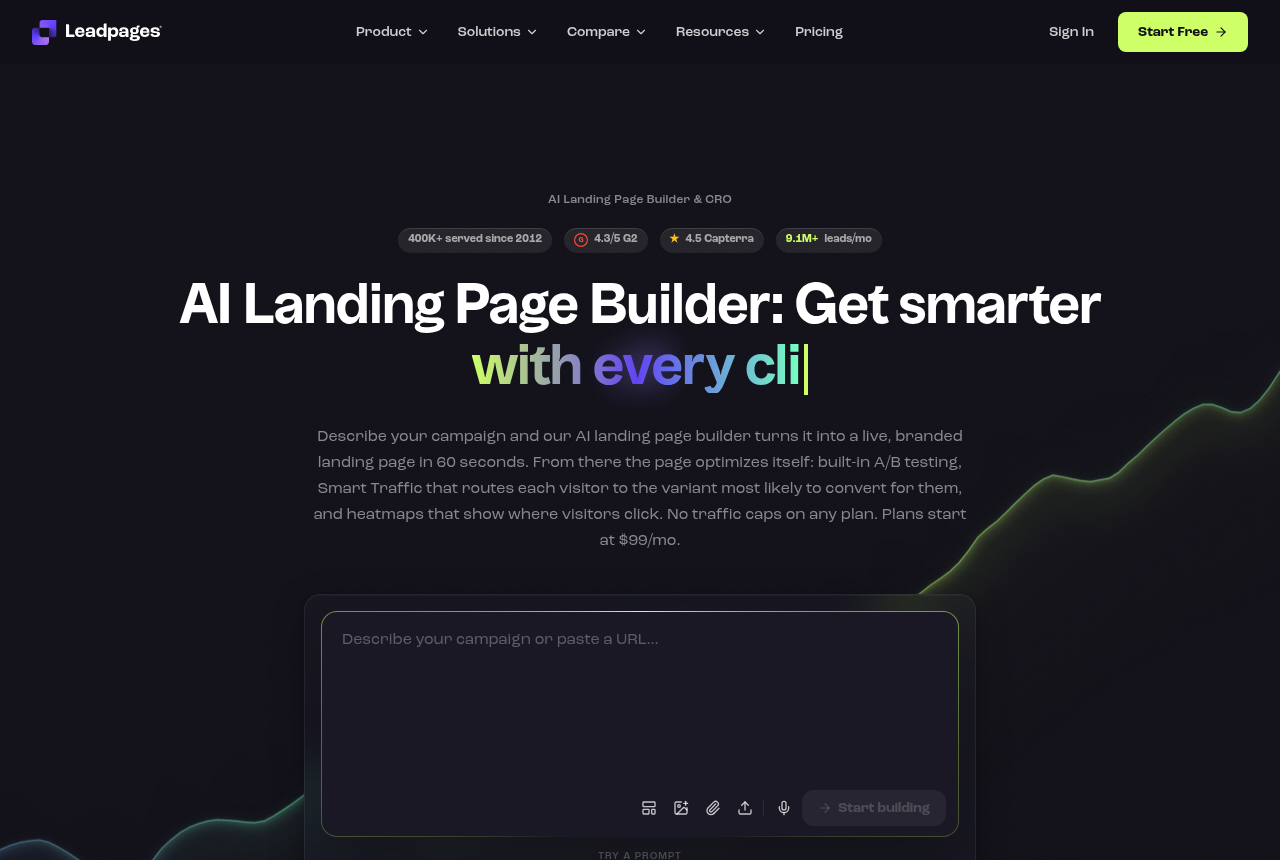
Leadpages puts the feature this site cares about on its entry paid plan. Grow is $99 a month, it includes server-side A/B testing, and no Leadpages plan caps your traffic. That combination is unusual: most rivals gate testing behind a $199 tier and meter your visitors. Optimize at $199 a month adds click and scroll heatmaps and Smart Traffic, which routes each visitor to the variant most likely to convert for them. The 7-day trial asks for a card up front. Leadpages ecommerce is basic, a Stripe embed rather than a real cart, so selling your own offer means bolting a checkout on beside it.
Kartra's cheapest plan is a trap for this buyer. Essentials is $52 a month on annual billing, but it holds you to 500 contacts, five pages and one product, and it takes a 5% cut of every sale. The realistic entry is Starter at $99 a month annually, or $119 month to month. Starter removes the transaction fee, makes pages, products and courses unlimited, lifts contacts to 2,500, and adds webinars and calendars. Growth is $189 a month annually for 12,500 contacts, affiliate management, deeper automation and a helpdesk. Professional is $429 a month annually for 25,000 contacts, real-time funnel analytics and API access. There is a 14-day trial that asks for a card, plus a 30-day money-back guarantee.
Notice that Leadpages Grow and Kartra Starter both land at $99 a month on annual billing. The number is the same and the purchase is not. Grow buys you a page-and-test specialist with no visitor cap. Starter buys you the base of a creator business: pages plus email, checkout, courses and memberships. Compare the jobs, not the price tags.

Leadpages is the sharper page-and-test tool
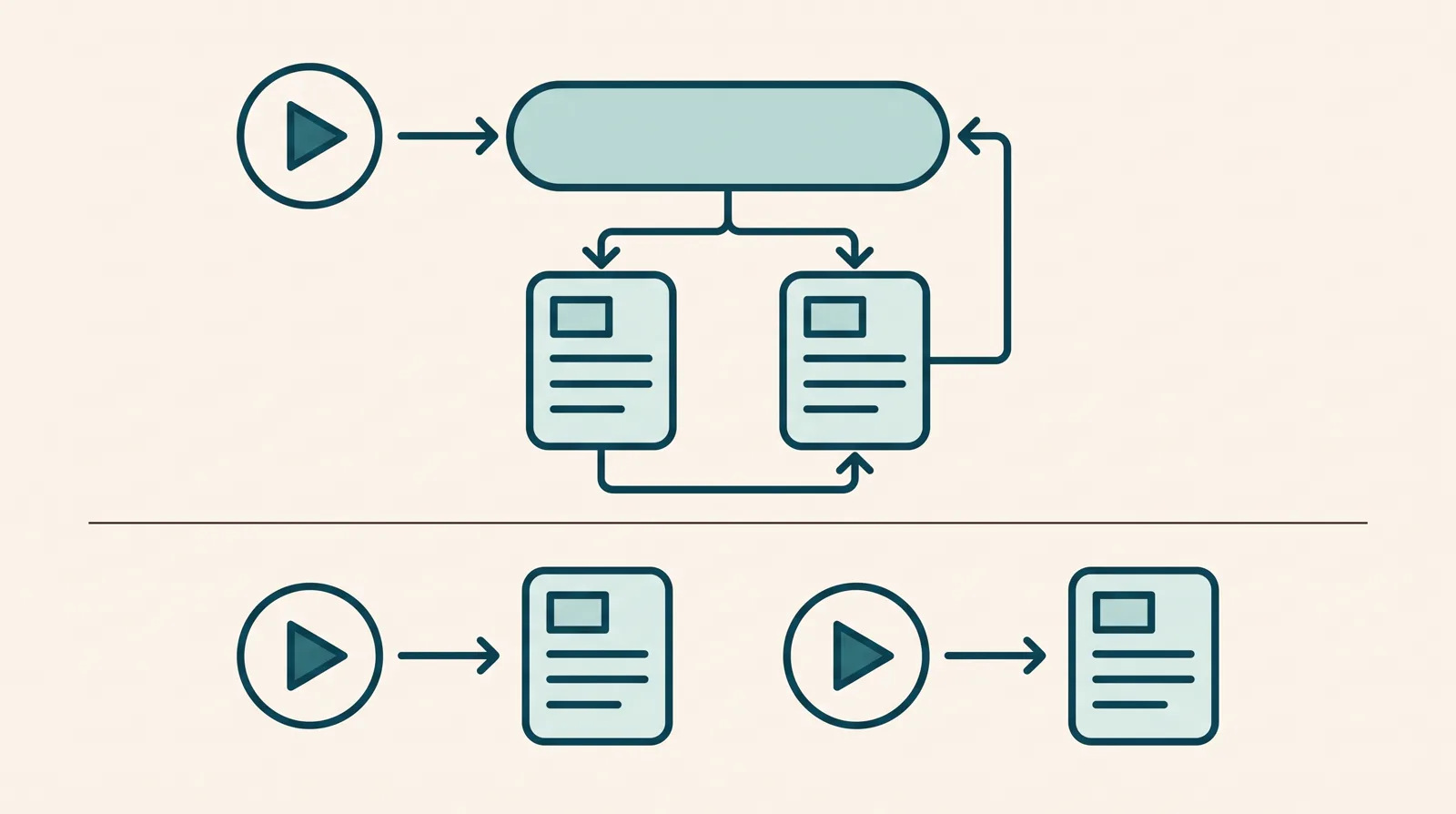
Leadpages is built around one loop: publish a page, test a variant, keep the winner. Its A/B testing is server-side, so a visitor is assigned to a variant before the page renders and there is no flash of the original. It generates page variants with AI to give you something to test against, and dynamic text replacement swaps the headline to match the ad keyword a click arrived on.
The part that matters for paid traffic is where the test lives. Leadpages rotates variants under the same published URL, so the link in your ad never changes. When Meta or Google has already spent to learn against one destination, that stability is the whole game. You change what visitors see without sending the campaign back through review or resetting its learning phase.
Kartra can test up to four page versions in one campaign and judge the winner against sign-ups or revenue, which is genuinely useful inside an owned funnel. But its testing is page-level: the versions are distinct pages, and its documentation does not describe them rotating under one stable campaign URL the way Leadpages does. For a media buyer whose first worry is protecting an established ad destination, that difference decides it.
Kartra runs the whole business behind the page
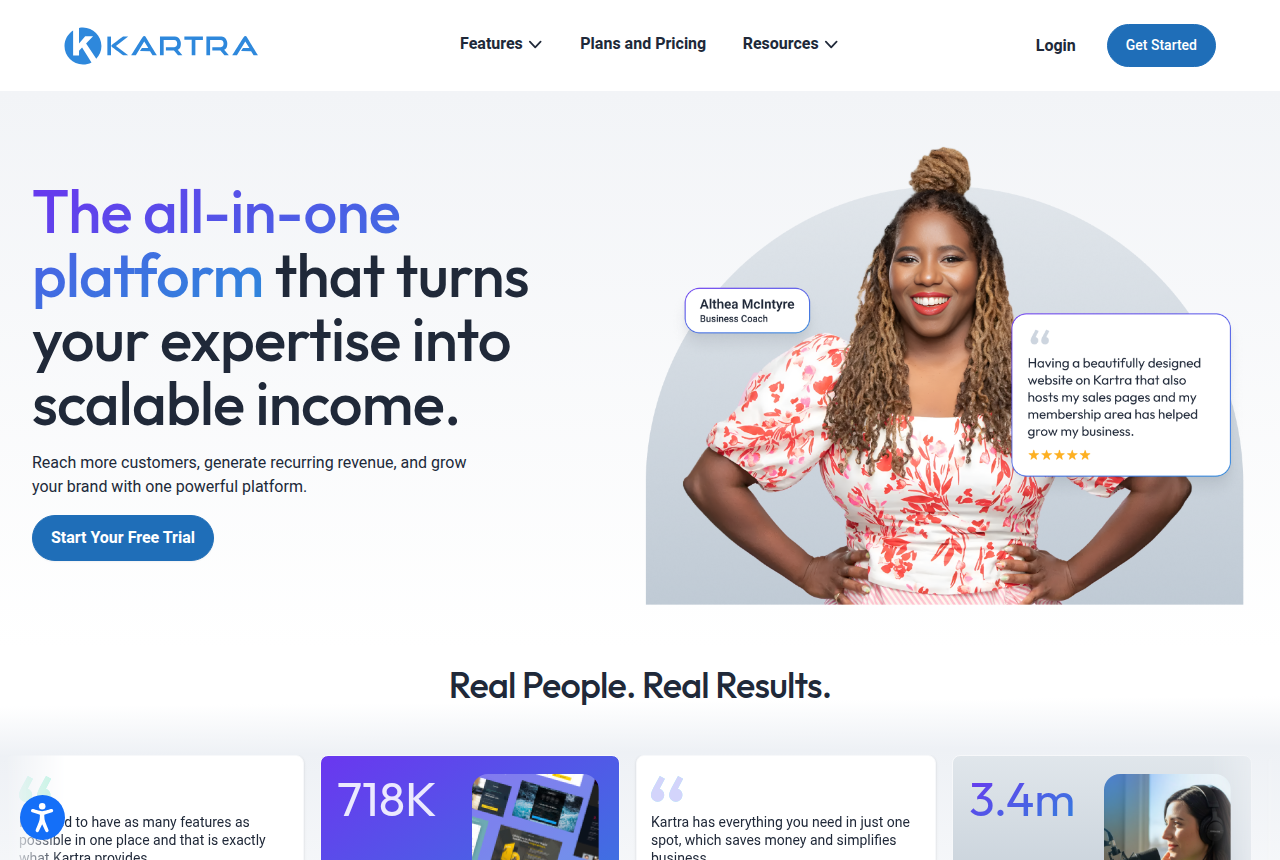
Kartra earns its place when the page is only the front door. It keeps landing pages, email and SMS, automation, a native checkout, products, courses, memberships, calendars, webinars, video hosting and a helpdesk in one account. From Starter up it takes no cut of your sales, and Growth adds affiliate management so you can recruit partners to sell your own offer. A coach can capture a lead, follow up by email, take payment, grant course access, book a call and answer a support ticket without the buyer ever leaving Kartra.
That breadth is the reason to buy it, and reviewers say so plainly: they describe cancelling separate email, CRM and cart subscriptions after moving in. Leadpages cannot match it and does not try. It passes leads to other tools through integrations and leaves the selling, delivery and support to whatever you already run. If most of Kartra's rooms would sit empty, you are paying to learn and maintain software you do not use.
One caution on Kartra's affiliate management: it recruits and pays partners who promote your product. It is not the server-to-server postback attribution an affiliate media buyer uses to track conversions from an external network. Leadpages is not an affiliate tracker either. If you promote third-party offers on paid traffic, keep a dedicated tracker in the stack no matter which of these you pick.
What long-term users report
We do not run these tools on live campaigns. We read long-term user reports, current vendor documentation and pricing pages, then verify prices with each vendor. The pattern is not that one works and the other does not. Each is liked for the job it was built for and regretted when bought for the wrong one.
Leadpages users praise how quickly a page goes from blank to live, the templates and the fact that testing does not cost extra on the plan they are already paying for. The common gripe is in the vendor's own lineup: the split between HTML Pub publishing tiers and Leadpages CRO tiers reads as confusing, heatmaps and Smart Traffic wait for the $199 plan, and the ecommerce is too light to sell a serious offer through. The page is excellent; the store is an afterthought.
Kartra users praise consolidation above all else, and it is the most repeated point in its favour. The complaints are more serious than a pricing quibble. Buyers report slow, scripted support, occasional bugs in the page and email builders, and an editor that takes real time to learn. Kartra has run since 2018 and reports more than 60,000 customers, so the question is not whether it is a real platform. It is how much patience your business has when a larger system misbehaves.
Which one should you pick?
Leadpages, for paid traffic and lead capture
Choose Leadpages when the landing page is the job and your checkout, email and CRM already live elsewhere. It is the better default for this site's paid-traffic reader because server-side testing on the $99 Grow plan protects the ad learning you paid for, and no plan meters your visitors, so a campaign that scales does not push you into a higher tier for traffic alone. Move to Optimize only when you want heatmaps and Smart Traffic routing.
Accept the limits before you buy. The trial is short and needs a card, the plan lineup takes a minute to decode, and the built-in ecommerce is not enough to sell your own offer through. None of that changes the core fit: for building, capturing and testing at ad volume, Leadpages is the more direct tool.
Kartra, for selling and delivering your own offer
Choose Kartra when the page is one step in a business you also run. Starter at $99 a month annually is the practical starting point, because it drops the Essentials transaction fee and makes pages, products and courses unlimited. Growth becomes worth it when affiliate management, deeper automation and a helpdesk start to matter.
Accept the learning curve and the support record. Kartra can replace several subscriptions, but each function it adds is another part of the system your team has to understand. It wins when you will use that depth. It is the wrong buy when you wanted a page specialist and end up maintaining a creator platform, and its page-level testing will not protect a paid campaign the way Leadpages does.
ElasticFunnels, for an own-offer team running paid traffic
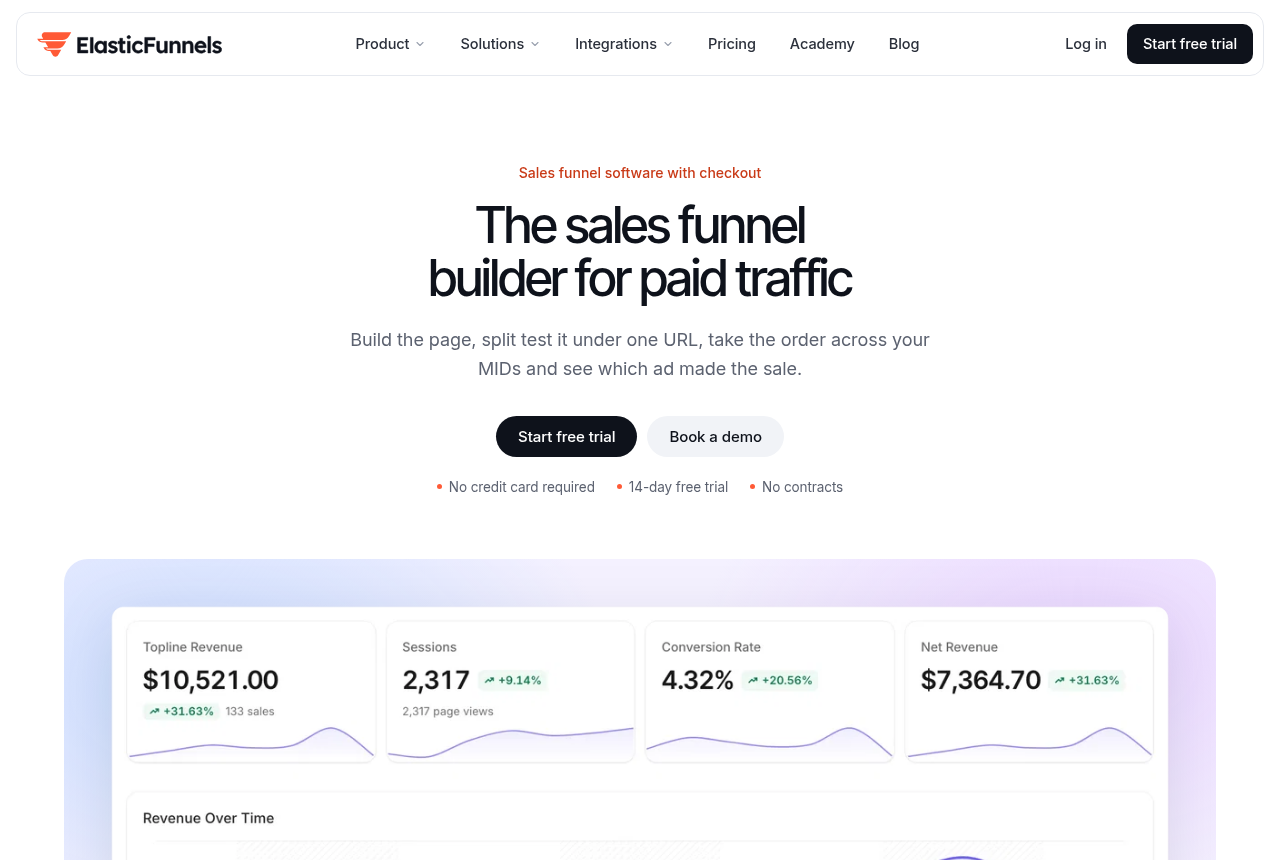
ElasticFunnels is the segment pick for the buyer this pairing leaves stranded: someone who sells their own offer, buys traffic to it, and wants Leadpages-style ad-safe testing and Kartra-style checkout on one record. It is a funnel platform for affiliates, product vendors, agencies and ecommerce teams running paid traffic. It builds or clones pages, rotates variants under one campaign URL, hosts a checkout with order bumps, one-click upsells and subscriptions, and keeps sessions, orders, rebills and refunds on a single timeline with attribution, a CRM and automations.
Starter is $97 a month, every feature is on every plan, and the 14-day trial needs no card. Revenue processed through an ElasticFunnels-hosted checkout carries a 0.5% fee. Its multi-MID routing, which spreads transactions across merchant accounts, matters most to sellers running enough card volume to need it; a smaller seller may never touch it and still gets the checkout, the upsells, the same-URL testing, the CRM and one-record reporting.
The honest drawback: ElasticFunnels is newer than Leadpages and Kartra, and there is very little independent third-party review coverage to check its claims against, so until you run real volume through it you are largely taking the vendor's word. That is what you would expect of a platform this recent, and it limits the outside proof rather than the checkout or testing themselves. Use the no-card trial to run one live campaign through it before you move a business across.
Our pick
Leadpages
Leadpages is the pick if you want server-side A/B testing without a visitor cap at a low entry price. Testing is included from the $99 Grow plan, where most rivals gate it behind $199, and every plan has unlimited traffic. Heatmaps and Smart Traffic routing wait for the $199 Optimize plan, and the 7-day trial asks for a card.
Frequently asked questions
Which is better, Leadpages or Kartra?
Do Leadpages and Kartra both support A/B testing?
Leadpages official sources
From Leadpages
Kartra official sources
From Kartra
- https://kartra.com/
- https://kartra.com/feature/shopping-cart-software/
- https://kartra.com/feature/email-automation-software/
Other sources
16 discussions and reviews read for this page. Quotes are excerpts; open a link to read the original in context.
- [cap-ease] Leadpages Reviews - Capterra
- [cap-quick] Leadpages Reviews (page 2) - Capterra
- [cap-templates] Leadpages Reviews (page 8) - Capterra
- [cap-flex] Leadpages Reviews - Capterra
- [vh-value] Leadpages Review: Pros & Cons (2026) - Ventureharbour
- [rg-billing] Leadpages Review 2026: Is It Worth $99/mo? - RevenueGeeks
- [hc-value] Leadpages Review 2026: Honest Verdict + 15 Real User Reviews - Hack'celeration
- [hc-hard] Leadpages Review 2026: We Tested Everything - Hack'celeration
- [ff-worth] Leadpages Review 2026: Pricing, Features & Worth It? - 49funnels
- [capterra-buggy] Kartra Reviews | Capterra
- [capterra-support] Kartra Reviews | Capterra
- [capterra-500k] Kartra Reviews | Capterra
- [trustpilot-polish] Kartra Reviews | Trustpilot
- [trustpilot-support] Kartra Reviews | Trustpilot
- [g2-bugs] Kartra Reviews | G2
- [g2-positive] Kartra Reviews | G2